Oyster is a strong employer of record choice when your main problem is employing a full-time worker abroad without opening a local entity. It combines local employment administration, payroll, benefits, and compliance support in one workflow. It is less suitable if you need a recruiting partner to source and screen candidates from scratch.
Let's talk about your hiring need
15 minutes to scope the role and see what a remote team could look like.
That distinction matters for a first international hire. An EOR can make the employment relationship workable after you have chosen someone. It does not automatically solve the harder question of finding the right person.
What Oyster handles for a first global hire
Oyster handles the legal and administrative side of an international employee relationship. Its remote hiring service describes support for contracts, onboarding, payroll, benefits, visas, and offboarding, with coverage advertised across 180+ countries.
For a small hiring team, the useful part is the handoff. You select the candidate and agree on the role, compensation, and start date. Oyster then helps turn that decision into a compliant local employment arrangement.
The workflow typically includes:
- A country and employment review
- A locally compliant employment agreement
- Payroll, tax withholding, and social contribution administration
- Benefits and expense support
- Employee onboarding and ongoing HR assistance
- Offboarding when the employment ends
Oyster also says it can provide a cost estimate before hiring and lets employers manage invoices, reimbursements, and payroll reports in one platform. Those features reduce internal administration, but they do not replace candidate evaluation.
Oyster compared with Remote, Deel, and a recruiting partner
The best option depends on where your hiring process is getting stuck. Oyster, Remote, and Deel are employment infrastructure providers. A recruiting partner such as Conexo is useful earlier in the funnel, when you need qualified international candidates, interviews, and a managed path to a hire.
| Provider | Best at | Candidate sourcing | Employer of record | Payroll and compliance | Main limitation |
|---|---|---|---|---|---|
| Oyster | Employing a chosen international hire | Limited | Yes | Yes | You still need a candidate pipeline |
| Remote | Global HR across employees and contractors | Some sourcing tools | Yes | Yes | The broad platform can be more than a one-hire team needs |
| Deel | Broad global worker administration | Not a full recruiting service | Yes | Yes | Pricing and product scope need to be checked for your country and worker type |
| Conexo | Recruiting and embedding international professionals | Yes | Managed hiring support | Managed behind the scenes | It is a talent partner, not a self-serve EOR dashboard |
The comparison is not simply “which platform has the most countries?” It is “which part of the hiring journey do you need someone else to own?”
Oyster versus Remote for global hiring
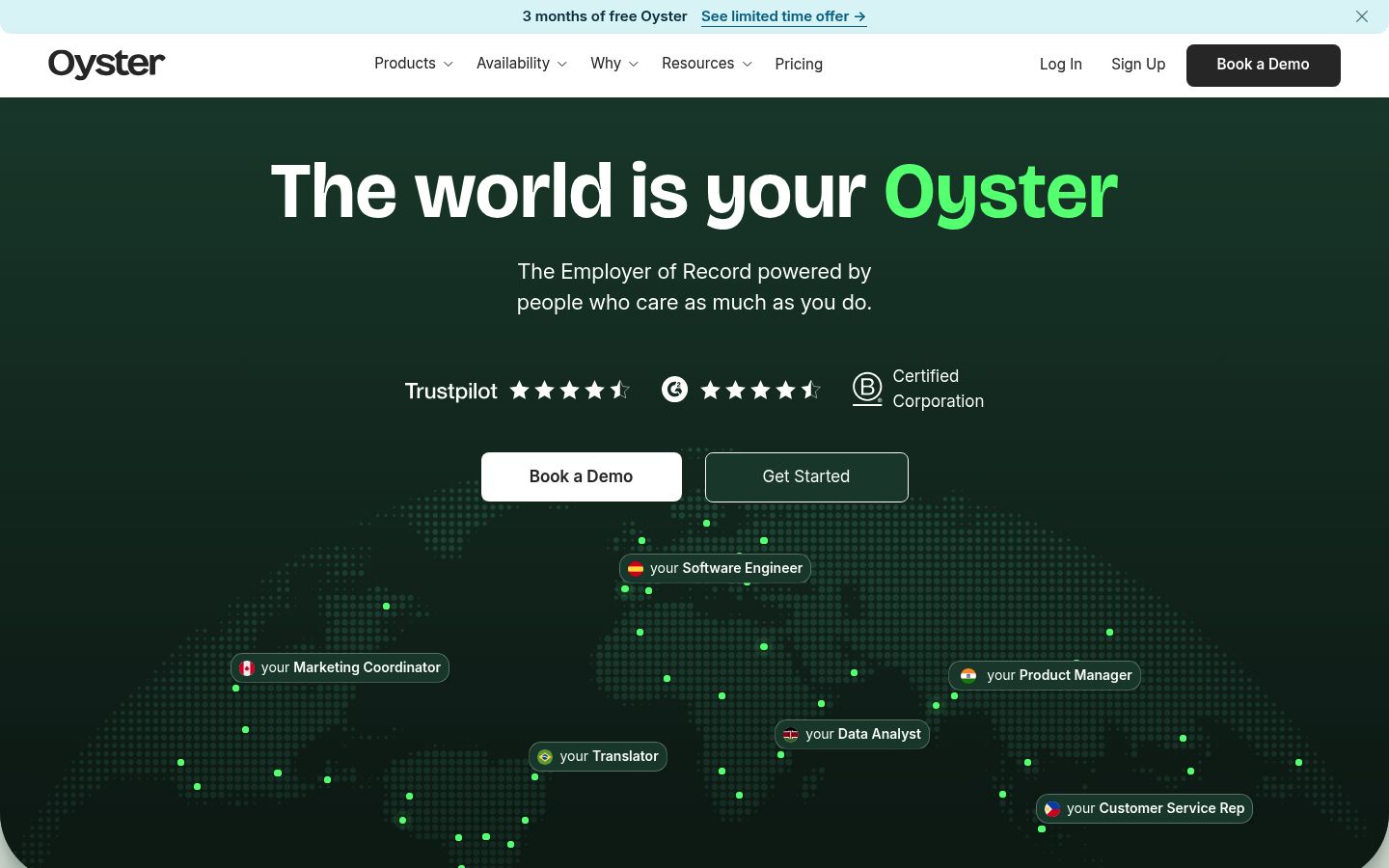
Oyster is a better fit when you already have a candidate and want a clear employment path. Its public hiring page emphasizes compliant agreements, local employment intelligence, payroll, and support for onboarding and offboarding.
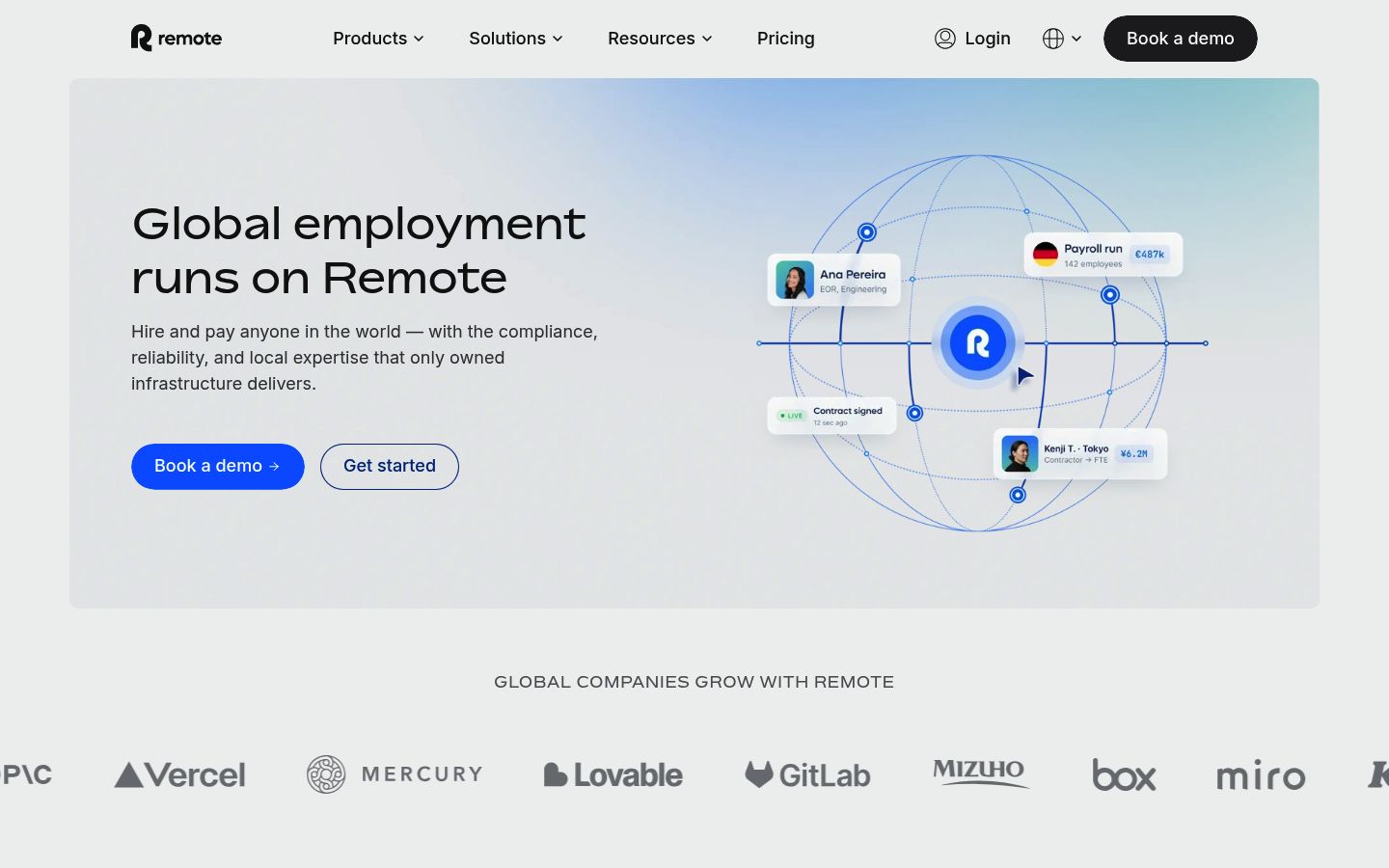
Remote is a better fit when you want one broader HR system for employees and contractors. Its global HR platform also advertises recruiting tools, talent insights, sourcing, employee cost calculations, global benefits, contractor management, and entity support.
Remote’s wider product surface can help a growing People team. For a founder hiring one person, it may also create more decisions than necessary. Ask for the exact workflow, country coverage, implementation time, and total cost for your worker type before choosing.
Oyster versus Deel for global hiring
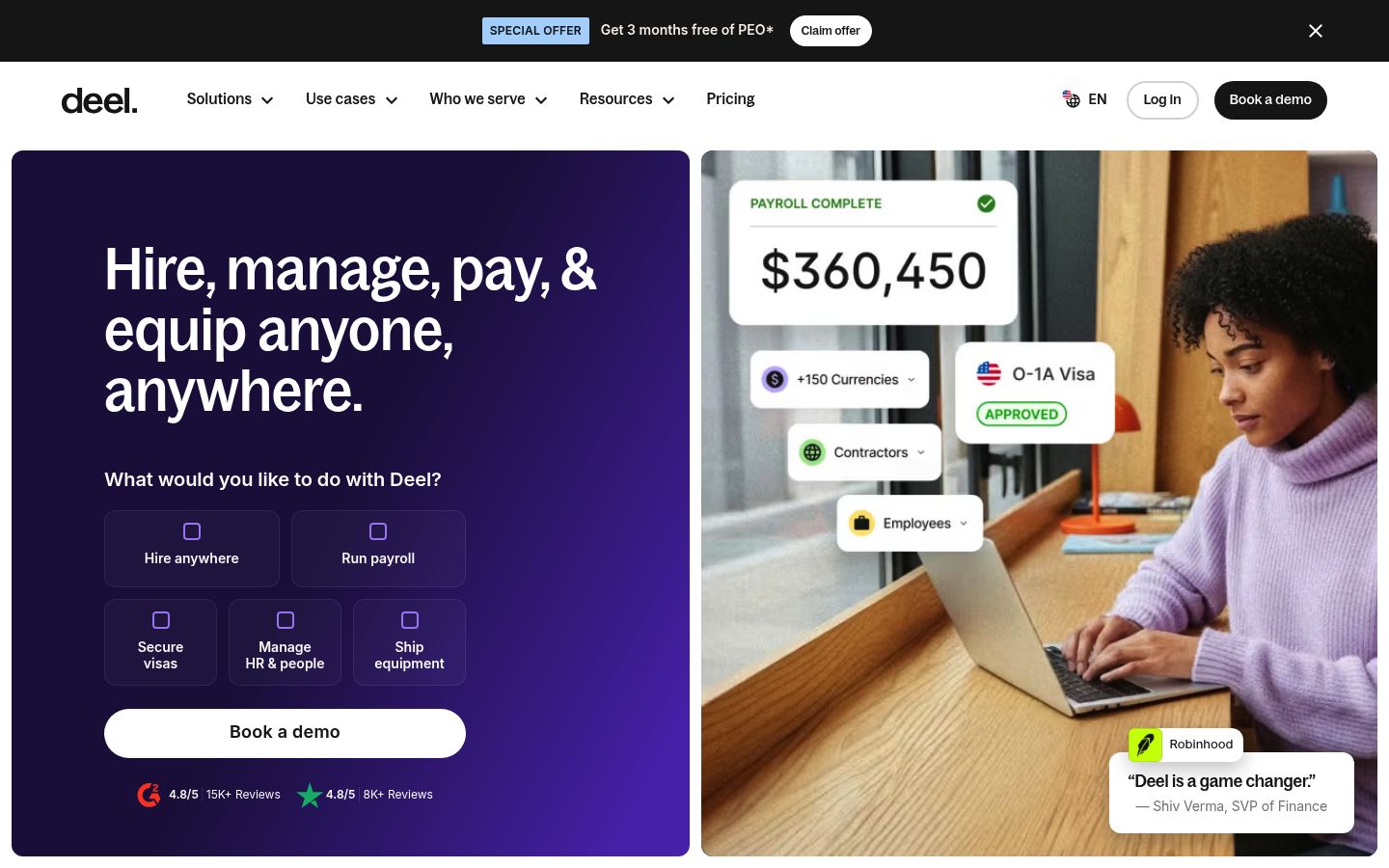
Oyster and Deel both support international employment, but their public pages should be read as product descriptions, not as a substitute for a country-specific proposal. Deel’s official website covers global payroll, EOR, contractors, immigration, and other HR services, while Oyster puts more emphasis on local employment intelligence and employee experience.
Deel may fit teams that want a broad set of worker and HR products under one account. Oyster may fit teams that care most about the employee employment journey and local offer design. Neither choice removes the need to validate the worker’s classification, local benefits, notice rules, and termination process.
Oyster versus a recruiting partner
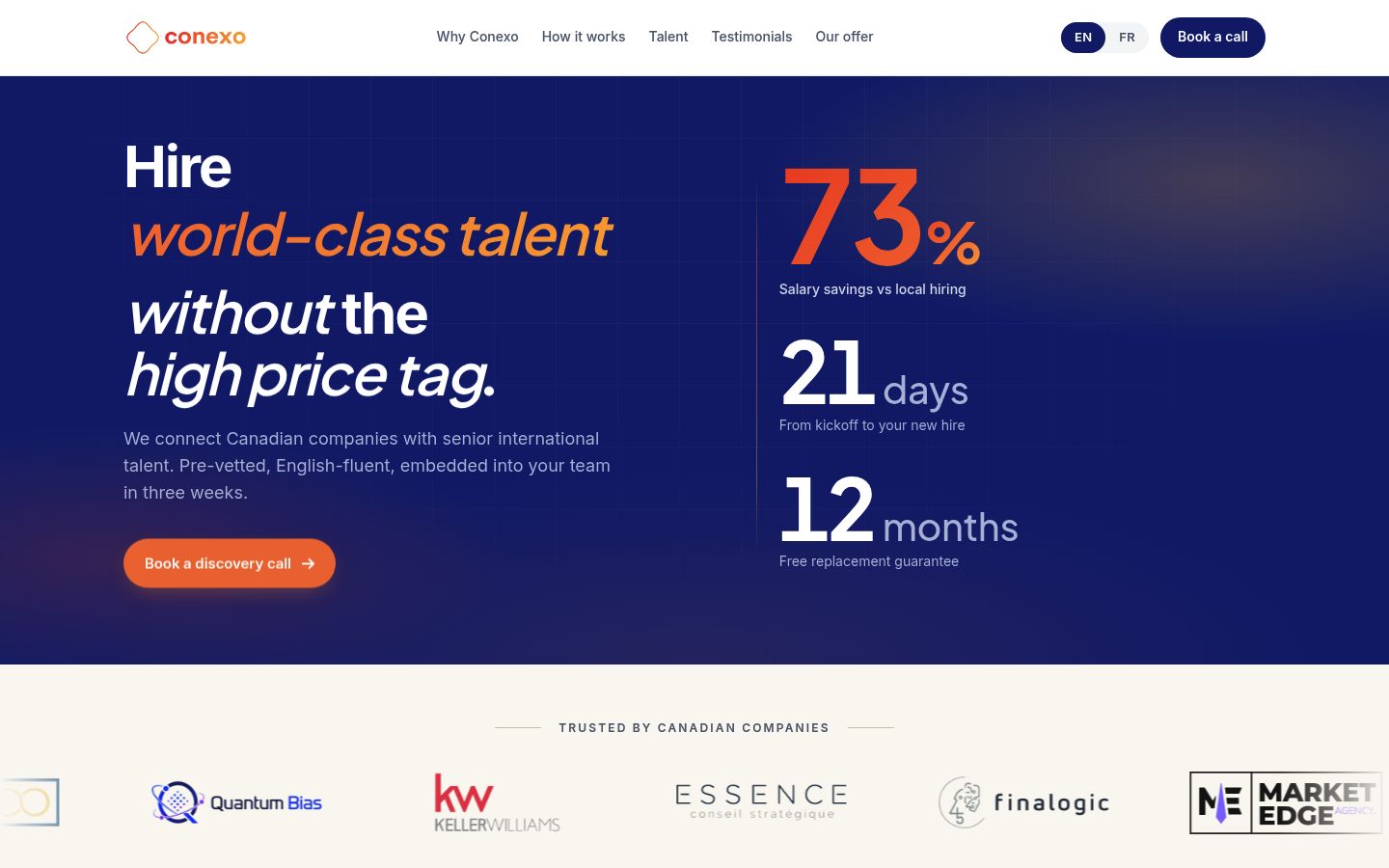
An EOR and a recruiting partner solve different problems. Oyster helps employ a person you have selected. A recruiting partner helps define the role, source candidates, screen them, coordinate interviews, and support the transition into the team.
Conexo says it recruits in more than 50 countries, including Madagascar, the Philippines, India, Morocco, Kenya, and South America. It works with English- and French-speaking professionals and supports companies worldwide. Its published process says it screens 50 to 150 or more profiles, runs interviews and skills assessments, and presents a shortlist of three finalists.
If you need both services, treat them as two workstreams:
- Find and assess the candidate.
- Choose the employment structure.
- Confirm the country-specific offer and compliance requirements.
- Onboard the employee through the selected employment provider.
This is different from the decision covered in Employer of Record vs. International Recruiting Agency: How to Choose, which explains the broader provider choice. Here, the practical question is where Oyster fits after a real candidate is ready to hire.
What an EOR does not do
An employer of record does not become your hiring manager. It generally does not decide whether a candidate can do the work, build your interview scorecard, or create a strong employer brand in a new market.
You still own:
- The job description and success measures
- Technical or role-specific testing
- The final interview and hiring decision
- Day-to-day management
- Performance feedback and team integration
- The business case for the hire
You also need to check whether the service is available for the person’s country, role, contract type, and planned compensation. Country coverage on a marketing page is not the same as a confirmed, ready-to-use employment route for every situation.
What to verify before choosing Oyster
Before signing, ask Oyster for written answers to six questions. They reveal more than a generic list of features.
1. Who is the legal employer?
Confirm which Oyster entity or local partner employs the worker and who carries responsibility for the employment relationship. Oyster states that it is the legal employer for full-time team members hired through its EOR service, but your agreement should control the specific arrangement.
2. What is included in the monthly invoice?
Ask how the proposal treats salary, employer contributions, benefits, currency conversion, reimbursements, deposits, and one-time fees. Oyster publicly lists EOR pricing starting at $699 per employee per month and contractor pricing at $29 per contractor per month on its hiring page. Confirm that those figures apply to your country and plan before using them in a budget.
3. Who supports the employee?
Clarify whether the employee gets local HR, payroll, benefits, immigration, and employment-law support. Ask who answers urgent questions and what the escalation path is when payroll or leave information is wrong.
4. How fast can the employee start?
The public page says hiring can happen in as fast as 48 hours, but that is not a promise for every country or case. Ask what must be completed first, which documents are needed, and whether the start date depends on a local review.
5. What happens if the hire does not work out?
Review notice periods, final pay, unused leave, severance, termination approvals, and any extra charges. The cheapest monthly fee is not the cheapest arrangement if the exit process is unclear.
6. Can you move away from the EOR later?
If you expect to open an entity or bring payroll in-house, ask how an employee transfer works. Confirm who owns the employment records, whether the employee can transfer without interruption, and what fees or notice rules apply.
When Oyster is the right choice
Oyster is a good choice when you have already found the person, need to hire without setting up an entity, and want one provider to manage local employment administration. It is especially practical for a first full-time employee in a country where your team has no HR or payroll knowledge.
Choose a recruiting partner first when the real problem is candidate supply. That is the better path if you need a shortlist, local sourcing, structured screening, bilingual talent, or help deciding whether the role should sit in Madagascar, the Philippines, India, Morocco, Kenya, South America, or another market.
Choose a broader HR platform when you are building a repeatable People operation across employees, contractors, benefits, payroll, and entities. Remote is stronger for that all-in-one direction. Deel is worth considering when its wider worker and HR product mix matches your operating model.
FAQ
What is an employer of record?
An employer of record is an organization that legally employs a worker on behalf of another business. It handles local employment administration such as payroll, taxes, benefits, and compliance while the client directs the employee’s day-to-day work.
Is Oyster an employer of record?
Yes. Oyster offers an EOR service for full-time international employees and states that it is the legal employer for those workers. The exact entity, country route, benefits, fees, and responsibilities should still be confirmed in the agreement.
What does global hiring mean?
Global hiring means recruiting and employing people who live in countries outside the company’s home market. The work can involve candidate sourcing, local contracts, payroll, benefits, taxes, compliance, and ongoing HR support.
Is Oyster better than Remote for global hiring?
Oyster is often the simpler fit when you already have a candidate and want an EOR-led employment workflow. Remote is often the better fit for a broader HR operation that combines employee hiring, contractor management, recruiting tools, benefits, payroll, and entity support.
Is Oyster better than Deel?
Neither is automatically better for every company. Oyster emphasizes local employment intelligence and employee support, while Deel offers a broad set of global worker and HR services. Compare the country-specific proposal, support model, contract terms, and total invoice rather than choosing from a feature list alone.
Does an EOR recruit employees?
An EOR can employ and manage a selected worker, but it is not necessarily a recruiting agency. If you need sourcing, screening, interviews, and a finalist shortlist, use a recruiting partner or confirm that the provider offers those services separately.
Related articles
- Employer of Record vs. International Recruiting Agency: How to Choose
- Deel vs Remote vs Oyster vs Multiplier vs Pebl: EOR Pricing Compared
- Best Offshore Hiring Platforms for Startups
- Employer of Record vs Hybrid Recruitment
Sources & References
- Oyster Remote Hiring - EOR workflow, country coverage, pricing, and support claims
- Remote Global HR - global HR, recruiting, payroll, benefits, and contractor features
- Deel - official global employment product scope
- Conexo - recruitment footprint and published hiring process