Tunisia is a strong option for companies that need remote workers who can operate in French, Arabic, or English, especially in software, finance, customer support, and digital operations. The right hiring model depends on whether you need a dedicated employee, a short project, or a local employment partner.
Let's talk about your hiring need
15 minutes to scope the role and see what a remote team could look like.
This guide explains how to hire remote talent from Tunisia, what to check before making an offer, and how to choose between direct employment, an employer of record (EOR), a staffing partner, and contractor work.
Why hire remote workers from Tunisia?
Tunisia gives international teams access to a multilingual talent pool with close working ties to Europe and a practical overlap with many North American teams. French is widely used in business and higher education, while Arabic is the country's main language and English is common in technical and international roles.
The time zone is also workable for distributed teams. Tunisia uses UTC+1, so a Tunisian employee can overlap with European teams through most of the workday and with North American teams during the afternoon.
The main reasons companies consider Tunisia remote staffing are:
- French-speaking customer service, sales, finance, and operations talent
- Software developers, QA specialists, IT support, and data professionals
- A location that can support European collaboration and scheduled North American overlap
- Access to talent outside the most competitive Western hiring markets
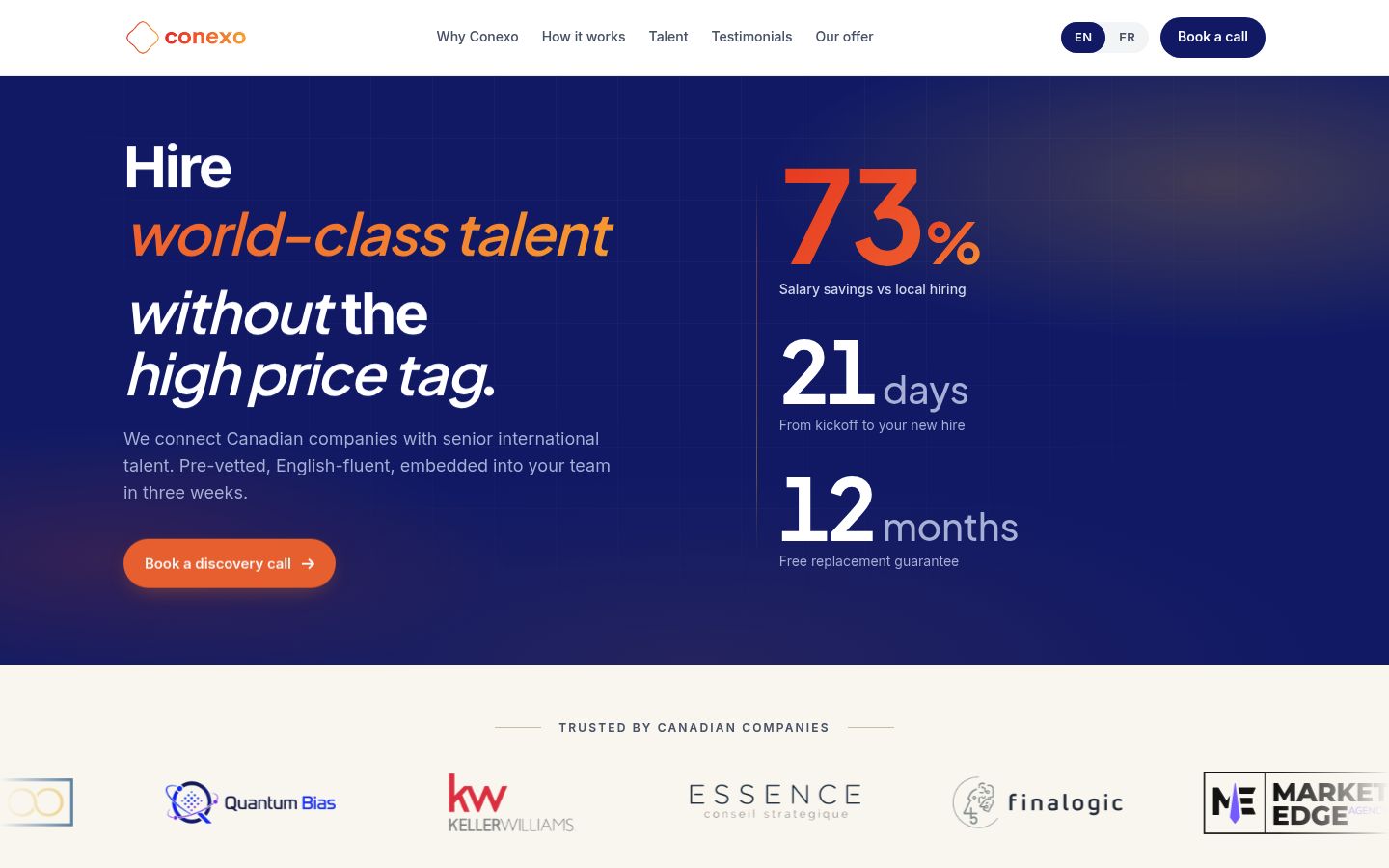
Conexo hires English- and French-speaking professionals across more than 50 countries, including Tunisia, Morocco, Kenya, Madagascar, the Philippines, India, and countries across South America. That makes Tunisia one option in a broader international hiring plan, not a standalone sourcing bet.
What roles can you fill in Tunisia?
Tunisia is a practical fit for remote roles that need language ability, technical training, or repeatable operating processes. Your hiring brief should define the required language and working hours before you start sourcing.
Technology and IT
Companies hiring remote developers in Tunisia commonly look for full-stack developers, QA testers, IT support specialists, data analysts, and cybersecurity professionals. Ask candidates to complete a role-specific work sample instead of relying on a CV or a list of tools.
Finance and administration
Accounting technicians, bookkeepers, financial operations staff, and administrative assistants can support international teams from Tunisia. For finance roles, test the candidate's familiarity with your reporting process, software, documentation standards, and working language.
Customer support and sales operations
French-speaking customer service, appointment setting, lead qualification, and back-office work can suit Tunisia-based teams. Define the expected language level with a live conversation and a written exercise. A profile that says “fluent French” is not enough for a customer-facing role.
Marketing and content
Digital marketing specialists, SEO coordinators, social media managers, and French- or Arabic-language writers are other possible matches. Give candidates a short brief that mirrors the work they will do after joining.
How much does it cost to hire remote talent from Tunisia?
There is no single Tunisia salary that applies to every role. Pay changes with seniority, technical depth, language requirements, city, employment model, and whether the person supports local or international clients.
Use a role-based compensation process:
- Write down the outcomes the person owns, not just the job title.
- Set a gross salary range in Tunisian dinars and confirm how it will be paid.
- Add employer costs, statutory contributions, benefits, equipment, currency conversion, and provider fees.
- Compare the full employment cost with the cost of a local hire or a contractor.
- Review the range with a Tunisia-based HR or employment specialist before you make an offer.
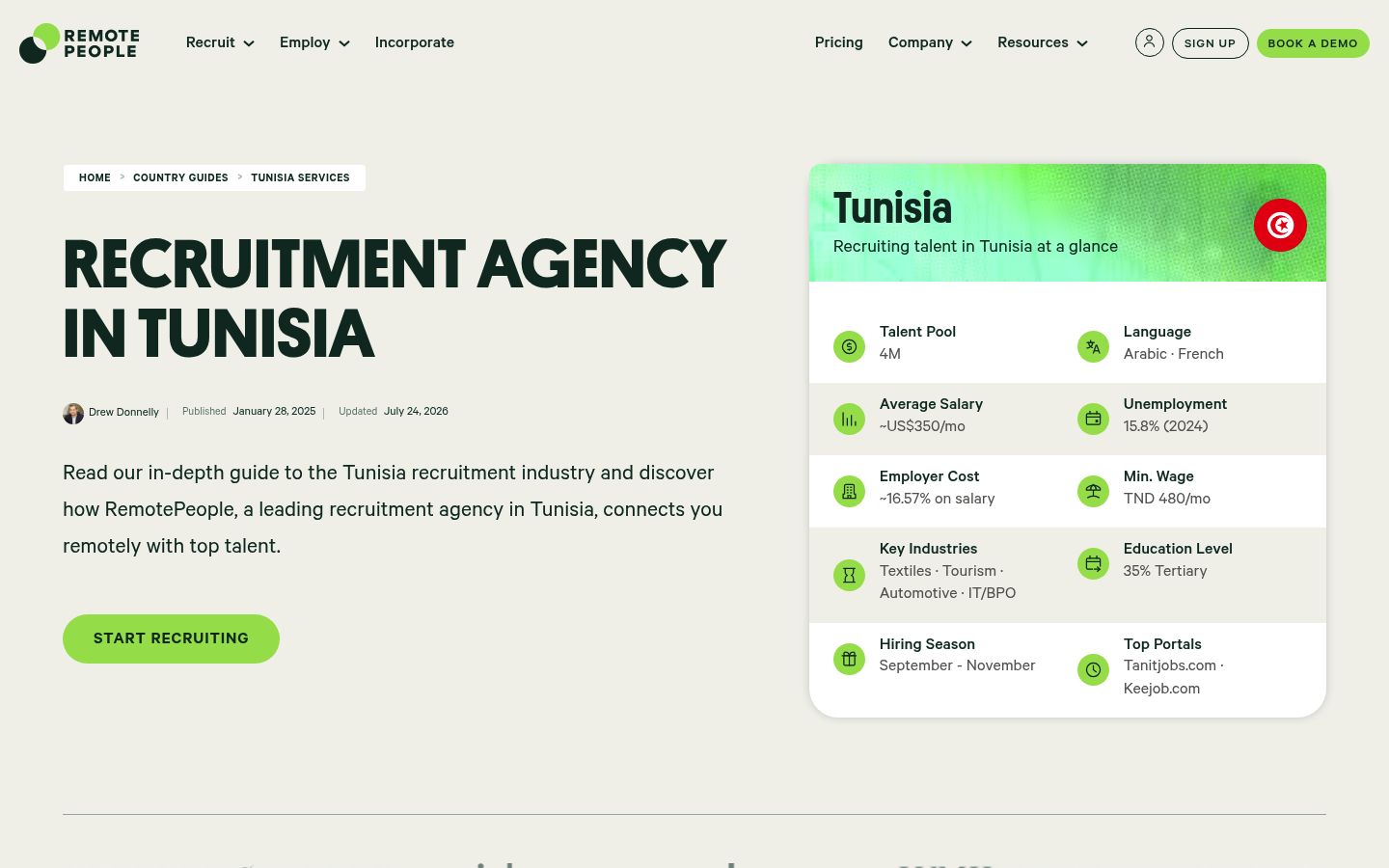
Public provider benchmarks show why you should verify figures at the time of hiring. For example, RemotePeople's Tunisia guide publishes its own market snapshot and identifies an employer cost of about 16.57% on salary. Treat that as a provider benchmark, not a substitute for current local advice.
Do not copy a salary table from an old blog post. Currency values, demand for technical roles, and local employment rules change. A provider should give you a current cost estimate for the exact role and hiring model.
Which hiring model should you use?
The best way to hire remote workers in Tunisia is to match the legal and operational model to the work. A permanent, controlled role should not be treated like a short freelance assignment.
| Hiring model | Best for | Main question to answer |
|---|---|---|
| Direct employment | A long-term team and an established Tunisia entity | Can your entity run compliant payroll and HR locally? |
| Employer of record | One or more employees without a local entity | Does the EOR cover Tunisia and accept the employment risk? |
| Global staffing partner | A dedicated employee plus recruiting, payroll, and ongoing support | Who manages sourcing, employment, and performance follow-up? |
| Independent contractor | A defined project with genuine independence | Does the day-to-day relationship look like employment? |
Direct employment
Direct employment gives you the most control, but it also puts the local obligations on your company. You need a compliant contract, payroll process, tax handling, social security registration, benefits administration, and a process for leave and termination.
This model makes more sense when you already have a Tunisia entity or plan to build a large local operation. Get local legal advice before hiring the first employee.
Employer of record
An employer of record hires the worker locally while your team manages the person's day-to-day work. The provider typically handles the employment contract, payroll, statutory filings, and required HR administration.
An EOR can be the simplest route for a first hire, but compare more than the monthly fee. Ask about the legal entity employing the person, benefits, notice and termination support, currency, onboarding timeline, data protection, and what happens if the worker leaves.
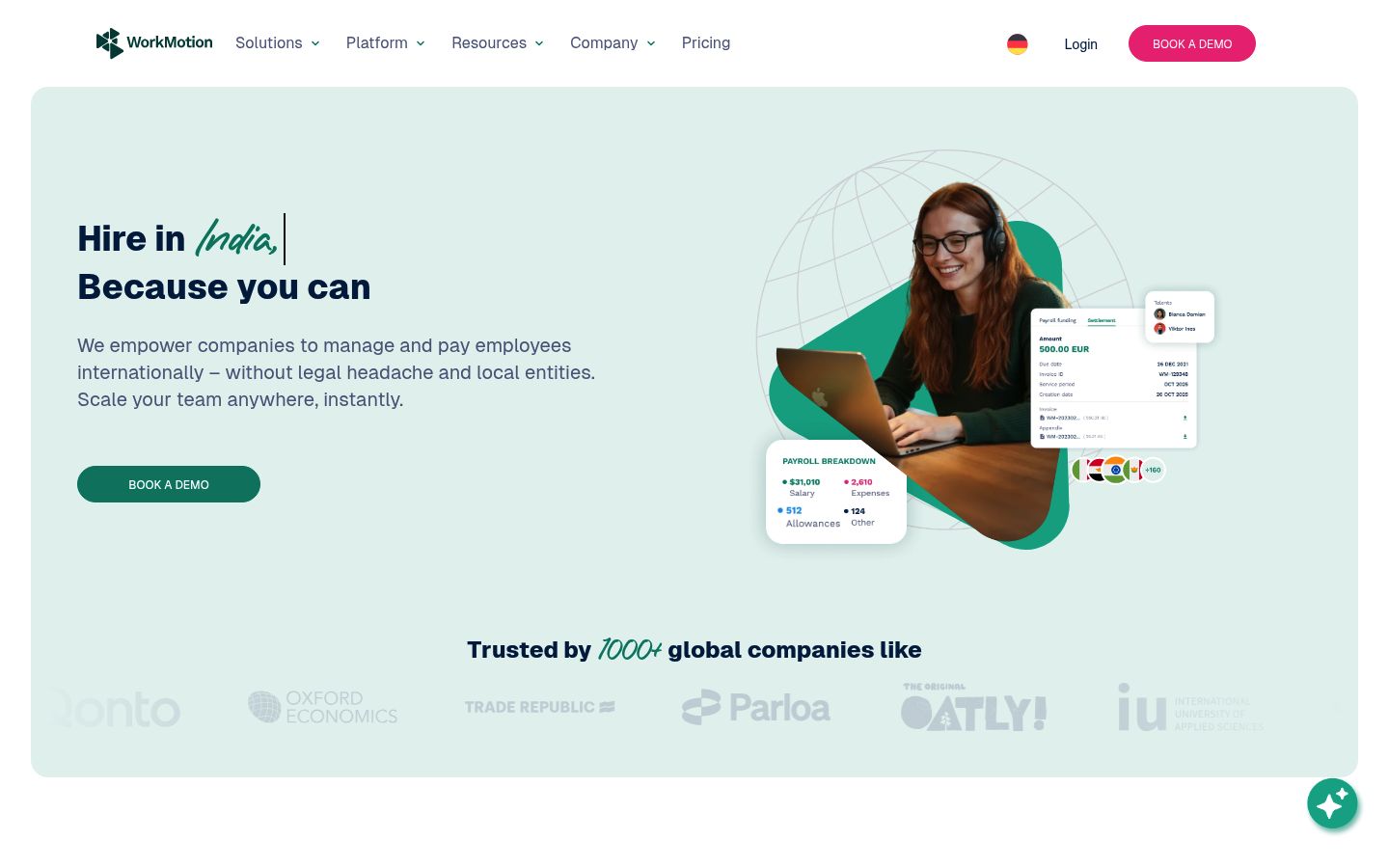
WorkMotion describes its EOR service as a way to hire in more than 160 countries without opening entities. Its public site also lists direct hiring and contractor services, so confirm which model and Tunisia coverage apply to your case.
Global staffing partner
A global staffing partner combines recruiting with employment administration and ongoing support. This suits companies that want a dedicated remote employee but don't want to build a local HR process from scratch.
Conexo's global staffing service describes a process that includes sourcing, testing, reference checks, employment, payroll, HR administration, and performance management. Conexo also states that it hires talent worldwide and offers English- and French-speaking professionals.
For a staffing partner, ask these questions before signing:
- Who employs the worker?
- Who owns the employment and misclassification risk?
- How are candidates tested and references checked?
- What is included in the monthly charge?
- What support does the employee receive after starting?
- Is there a replacement policy, and what does it cover?
Independent contractor
Contractor work can fit a defined project, short engagement, or specialist assignment. It becomes risky when the person works exclusively for you, follows your schedule, uses your tools, and performs an ongoing role under your direction.
Those facts can make the relationship look like employment even if the contract says “independent contractor.” Use a contractor classification review before onboarding, and switch to employment when the role is permanent or closely managed.
How to hire from Tunisia: a practical process
A repeatable hiring process helps you avoid both weak shortlists and compliance surprises.
1. Define the role and language requirement
Write the outcomes, working hours, manager, tools, salary range, and language standard. If French is required, specify whether the person needs conversational French, business writing, or customer-service fluency.
2. Choose the employment model first
Decide whether you need direct employment, an EOR, a staffing partner, or a genuine contractor. Do this before sourcing so candidates receive an accurate explanation of the relationship.
3. Source through more than one channel
Use a local recruitment agency, LinkedIn, Tunisia job boards, professional communities, and university networks where appropriate. RemotePeople's Tunisia recruitment page identifies local recruitment and EOR services as separate options and publishes Tunisia-specific hiring information.
4. Test the work and the communication
Use a short work sample, a structured interview, a language check, and reference checks. For a remote role, also test written communication, response habits, and the ability to explain work without relying on a shared office.
5. Validate the offer and contract
Before signing, confirm the gross salary, currency, pay date, benefits, leave, probation, notice, equipment, working hours, confidentiality, intellectual property, and termination process. Have a local specialist review the employment documents.
6. Set up onboarding before day one
Prepare accounts, equipment, access permissions, team introductions, a first-week schedule, and clear success measures. A remote hire should know who to ask, what to deliver, and how their work will be reviewed.
7. Review the arrangement after the first month
Check performance, workload, communication, payroll accuracy, and employee experience. Fix unclear expectations early instead of waiting for a renewal or performance problem.
Tunisia hiring compliance checklist
Use this as a starting checklist, not legal advice:
- Confirm whether your company needs a local entity or can use an EOR or staffing partner.
- Check current employment, tax, payroll, social security, and leave requirements.
- Confirm whether the role requires any permit or local registration.
- Use a contract that reflects the actual working relationship.
- Review contractor classification before using freelance agreements.
- Confirm how the worker will be paid and in which currency.
- Document confidentiality, intellectual property, data access, and equipment rules.
- Confirm the provider's responsibility for payroll, benefits, filings, and termination.
- Get advice from Tunisia-based counsel for a direct hire or unusual arrangement.
Is Tunisia a good alternative to Morocco for remote hiring?
Both Tunisia and Morocco can work well for international hiring, especially for French-speaking roles. Tunisia is a strong option when you need technical, finance, support, or multilingual talent and want a UTC+1 working day. Morocco may be a better fit for a larger BPO operation or a role tied to a different local talent market.
The better choice is the country where you can find the right person, pay fairly, manage the time-zone overlap, and support the employment relationship. Compare candidates and total employment cost rather than choosing by country label alone. For another country comparison, see Conexo's guide to hiring remote workers from Morocco.
When should you use a partner?
Use a hiring partner when you need a shortlist, want to hire without a Tunisia entity, or don't have local payroll and HR knowledge. You can manage sourcing yourself if you already understand the local requirements and have enough internal time for screening, contracts, payroll, and employee support.
Conexo works with companies worldwide that want international talent. Its stated model includes recruitment, employment, payroll, HR administration, and performance management, with a first shortlist typically presented in 3 to 4 weeks. Ask for the current scope and price for your role before treating those figures as a commitment.
FAQ
How do I hire remote workers in Tunisia?
Start by defining the role, language, working hours, and employment model. Then source and assess candidates, validate the contract and payroll setup, and use an EOR or staffing partner if you don't have a Tunisia entity.
Can I hire remote developers in Tunisia?
Yes. Tunisia can be a fit for full-stack development, QA, IT support, data, and cybersecurity roles. Use a practical technical assessment and verify communication skills before making an offer.
Do Tunisian workers speak English?
Many professionals use French and Arabic, and English is common in technical and international work. Test the exact spoken and written level the role requires instead of assuming fluency from a profile.
What is Tunisia remote staffing?
Tunisia remote staffing means recruiting professionals in Tunisia to work remotely for an international team. A staffing partner may also handle employment, payroll, HR administration, and performance support.
Can I hire a Tunisian worker as a contractor?
You can use a contractor for a genuine independent project, but the relationship must match the contract. If the person works like an employee under your direction, review classification risk and consider an employment model.
What is the time zone in Tunisia?
Tunisia uses UTC+1. That creates strong overlap with Europe and can support afternoon overlap with Eastern and Central North American teams when working hours are planned carefully.
How long does it take to hire someone in Tunisia?
The timeline depends on the role, assessment process, and employment model. Conexo says its first shortlist is typically ready in 3 to 4 weeks, while independent sourcing may take longer when the role is specialized.
Sources & References
- Conexo global and remote staffing (staffing model and process)
- RemotePeople Tunisia recruitment guide (provider market benchmarks)
- WorkMotion (EOR and global hiring model)
- Conexo Morocco hiring guide (country comparison)
If you are comparing Tunisia remote staffing with other international options, Conexo can help you define the role, compare the hiring model, and review qualified English- or French-speaking candidates from its worldwide talent network. Book a discovery call to discuss the role and timeline.